Walk through the abstracts of any major biochemistry journal this year and one class of molecule keeps surfacing: short chains of amino acids, some of them only three residues long, doing things in research models that far larger drugs struggle to do at all. Peptides have gone from a niche corner of pharmacology to one of its busiest frontiers — and the reason is not hype. It's geometry.
The specificity argument
Proteins and peptides are made of the same material — amino acids — and the difference is simply length. Below roughly fifty residues, a chain stays small and flexible enough to slot into a single, specific cellular receptor, the way a key fits one lock. Large proteins fold into elaborate shapes and interact broadly; small synthetic molecules often bind more targets than intended. A peptide can be engineered to touch one receptor and nothing else.
One receptor, one signalling cascade, one measurable response. That precision is why laboratories keep reaching for peptides as research tools: they let you ask the body's signalling systems very exact questions.
Repair signalling: the most-cited corner of the field
The busiest research area is tissue repair. BPC-157, a synthetic fragment of a protective protein found in gastric juice, has accumulated hundreds of publications for what it does in animal models: upregulating VEGF — the signal that tells the body to grow new blood vessels into damaged tissue — with published work spanning tendon, ligament and gut-lining models.
Its frequent research partner, TB-500, approaches repair from the mechanical side. It is a fragment of Thymosin Beta-4, the protein that regulates actin — the internal scaffold a cell assembles to physically crawl toward a wound. In research models it increases cell migration to injury sites. Two compounds, two halves of the same question: how tissue rebuilds itself.
Metabolism: three receptors at once
The loudest peptide story of the decade is metabolic. The GLP-1 class rewrote expectations for what receptor agonists can do, and the research frontier has already moved past single targets: retatrutide, currently in clinical trials, is engineered to activate GLP-1, GIP and glucagon receptors simultaneously — insulin signalling, appetite regulation and energy expenditure addressed as one design problem. For receptor pharmacologists it is the most interesting reference compound in years, and it is still investigational: not an approved medicine anywhere in the world.
Energy and ageing: the mitochondrial thread
Longevity research keeps circling two molecules. NAD+ is the coenzyme behind more than five hundred enzymatic reactions — the electron shuttle that makes ATP production run, and the required fuel for the sirtuin enzymes and PARP DNA-repair machinery that ageing research obsesses over. Cellular levels fall with age, which is precisely why restoring them became a research programme.
MOTS-C is stranger: one of the few peptides encoded by the mitochondrion's own genome rather than the cell nucleus. Under metabolic stress it travels into the nucleus and switches gene expression directly, activating AMPK — the enzyme cells use to sense low energy. Exercise-metabolism laboratories have not left it alone since.
The brain: neurotrophic factors
Cognitive research has its own pair. Semax, developed at a Moscow institute in the 1980s and still on the Russian formulary, is an ACTH fragment re-engineered to upregulate BDNF — the growth factor that governs how neurons grow, connect and adapt. Selank, derived from the immune peptide Tuftsin, is studied for anxiolytic activity in animal models without the sedation or receptor downregulation of classical anxiolytics. Both are standard tools in neuroplasticity research.
The interesting question stopped being whether peptides do anything. It's which signalling system you want to study next.
The state of the field, in one sentence
The part nobody puts in the headline
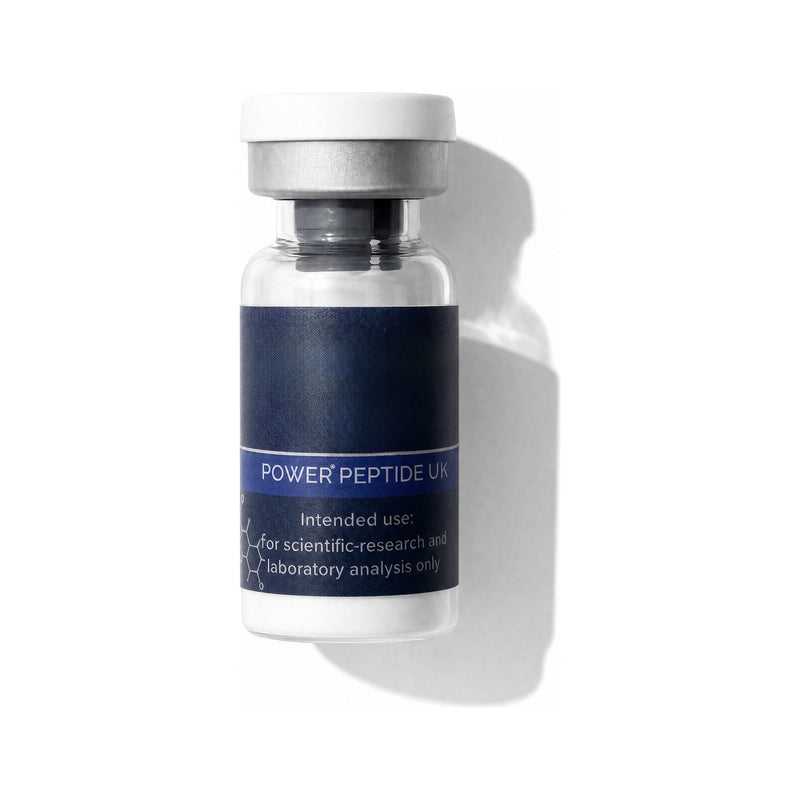
Every finding above depends on something unglamorous: knowing what was actually in the vial. Synthetic peptides are built one residue at a time, and every coupling step can fail, leaving near-identical deletion sequences behind. A "98% pure" figure is only meaningful if it comes from a chromatogram you can inspect, tied to the batch you hold — which is why serious laboratories ask for the certificate of analysis before they ask for the price.
That is the standard this catalogue was built around: every batch HPLC verified to ≥98%, identity confirmed by mass spectrometry, and a batch-specific certificate available to anyone who asks.
Every finding described on this page comes from published research in laboratory and animal models. All compounds are supplied strictly for in-vitro laboratory research — not for human or animal consumption, diagnosis or treatment. You must be 18 or over to purchase.